

Soap scum is sneakier than hard water stains. It’s not just minerals, it’s a mix of soap residue, body oils, and whatever’s floating in your water, all baking onto the glass every time you shower. Give it a few weeks and you’ve got a hazy, almost waxy film that regular glass cleaner just smears around instead of removing.
The fix isn’t complicated, but it does take the right order of operations. Here’s what actually cuts through it. For the rest of the room, our bathroom cleaning schedule hacks guide covers everything else worth keeping on top of.
What you’ll need
- White vinegar
- Baking soda
- A small squirt of dish soap
- Spray bottle
- Soft sponge or microfiber cloth
- Squeegee
- A melamine sponge (like a Magic Eraser), for stubborn spots
Rinse first
Warm water over the whole door before you touch any cleaner. This knocks loose the surface grime so you’re working with the actual scum layer, not a mix of fresh soap and old buildup.
Spray it with vinegar and water
Equal parts white vinegar and water in a spray bottle. Coat the glass generously and give it 5 to 10 minutes to sit. The acid in the vinegar breaks down the soap film enough that you’re not fighting it with raw scrubbing power.
One caveat worth knowing before you reach for the vinegar: if your shower door has an anti-fog coating or an etched or frosted finish, check the manufacturer’s care instructions first, as glass specialists point out. Stronger acidic cleaners can dull some of those coatings over time, and that’s not something you can undo.
Make a baking soda paste for the worst spots
Plain vinegar handles light buildup fine, but older, thicker soap scum usually needs backup. Mix about half a cup of baking soda with a small squirt of dish soap and just enough water to make a paste, roughly the consistency of toothpaste. Spread it over the stubborn areas and let it sit for 15 to 20 minutes.
The baking soda adds just enough mild abrasiveness to lift the grime without scratching the glass, as long as you don’t press too hard.
Scrub gently
Soft sponge or microfiber cloth, worked in small circles. If a patch is really stuck, a melamine sponge (the Magic Eraser kind) works well on soap scum specifically, more so than on hard water deposits. Still, test it in a corner first. Melamine foam is mildly abrasive at a microscopic level, and on some glass coatings that’s enough to leave faint scratching over time.
Skip steel wool and anything labeled as a scouring pad entirely. Not worth the risk.
Rinse and squeegee dry
Rinse the whole door with clean water, including the corners and the bottom track where scum likes to collect unnoticed. Then squeegee it dry immediately. Leaving the glass to air dry just invites a fresh layer of mineral spotting on top of the scum you just removed, which is the opposite of progress.
If it’s still hazy after all that
Scum that’s been sitting for a year or more sometimes needs more than vinegar and baking soda. A commercial soap scum remover made for glass is worth keeping around for that case, and Re-Bath’s shower cleaning guide lists a weekly Magic Eraser wipe-down as another solid option for smooth glass specifically. Look for one that specifically lists soap scum (not just hard water) on the label, since the two require slightly different chemistry to break down.
Don’t skip the instructions on whatever you buy. Contact time varies a lot between products, and some aren’t meant to sit on glass for more than a minute or two.
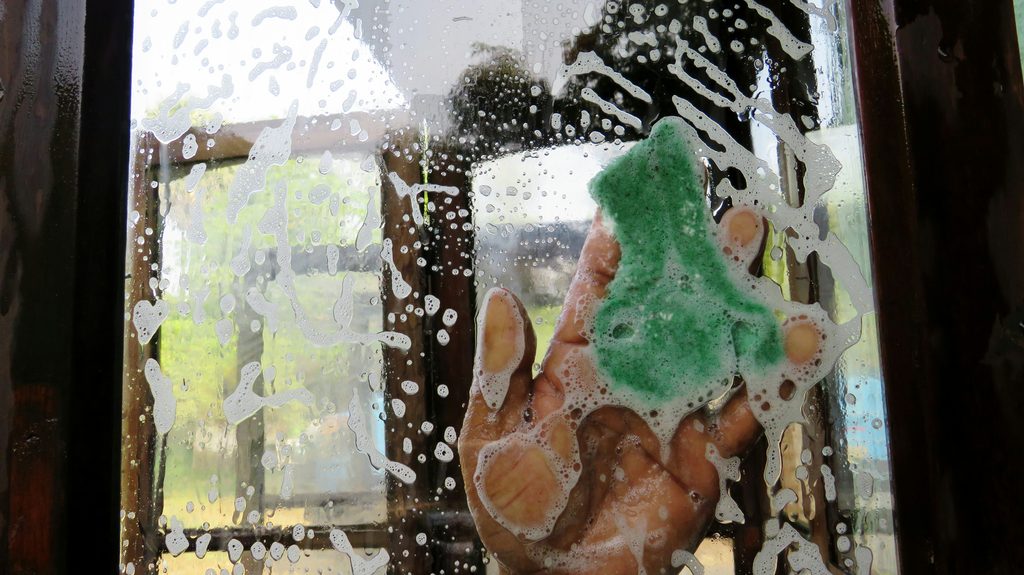
Photo by Suraj Tomer on Unsplash
Keeping it from building back up
Soap scum forms fast in a shower that gets used daily, so prevention matters more here than with plain hard water spots.
Squeegee after every shower. This is the single biggest lever. Wet glass with soap residue on it is exactly the environment scum needs to bond to the surface. Ten seconds with a squeegee removes most of that risk before it starts.
Switch to a lower-residue body wash or bar soap if you can. Some soaps, especially ones high in fats or tallow, leave noticeably more residue than others. If your glass fogs up with scum faster than a friend’s does with the same cleaning routine, the soap itself might be the variable.
Do a quick vinegar wipe-down weekly. You don’t need the full baking soda treatment every time. A fast spray-and-wipe once a week keeps scum from ever thickening into the stuff that takes real effort to remove.
Keep the bathroom ventilated. Less lingering humidity means the film that does form dries faster and thinner, instead of staying wet and soaking into the glass surface.
Products worth keeping around
| Category | Volume (per year) | Frequency | Essential items | Deal |
|---|---|---|---|---|
| DIY Cleaning Solution | ~12 bottles | Weekly | White vinegar, baking soda, dish soap, spray bottle | 🛒 View deals |
| Microfiber Cloths | 1 pack (multi-use) | Weekly wash | Microfiber cloths | 🛒 View deals |
| Squeegee | 1 replacement | Daily use | Shower squeegee | 🛒 View deals |
| Melamine Sponge | 1 pack (multi-use) | As needed | Melamine sponge (e.g. Magic Eraser) | 🛒 View deals |
| Soap Scum Remover | 2–4 bottles | As needed | Commercial soap scum remover | 🛒 View deals |
Some links on this page may be affiliate links. If you purchase through one of these links, we may earn a small commission at no additional cost to you.
Questions people ask
Does vinegar actually remove soap scum, or just hard water stains?
Both, to a point. Vinegar’s acidity breaks down the mineral component of scum and loosens the soap film enough to wipe away. For scum that’s been building for months, you’ll usually need the baking soda paste on top of it.
Can I use a Magic Eraser on shower glass?
Carefully, yes. Melamine sponges work well on soap scum specifically, but they’re mildly abrasive, so test an inconspicuous spot first and avoid them altogether if your glass has a protective coating or an etched finish.
Why does my shower glass get scummy faster than it used to?
Usually it’s a change in soap or body wash, harder water than before, or just less frequent squeegeeing. Residue-heavy soaps and infrequent drying are the two biggest culprits.
What’s the easiest way to prevent soap scum day to day?
Squeegee the glass after every shower. It’s the one habit that does more work than any cleaner, because it stops the residue from drying onto the glass in the first place.
Bottom line
Soap scum takes a little more effort than plain hard water spots because it’s part mineral, part soap, part body oil. Vinegar handles the light layer, a baking soda paste handles the rest, and a squeegee habit is what keeps it from coming back. If you’re dealing with scum that’s been there for years, a dedicated remover built for soap residue, not just hard water, is worth adding to the cabinet. Looking for more ways to keep the rest of the bathroom on a routine? Check out our full easy bathroom cleaning schedule hacks guide.