
Most people kill their first fish within a month. Not because they’re neglectful. They just didn’t know what they were walking into. In order to prevent these mistake, you need to have a list of fish tank essentials that will make sure your fish will have a great time in your aquarium.
Setting up a freshwater aquarium looks simple on the surface: buy a tank, add water, add fish. But that shortcut skips the biological groundwork that keeps fish alive long-term. Get the setup right, and this hobby becomes one of the most satisfying things you’ll put in your home. Get it wrong, and you’ll be doing a lot of frustrated Googling at 11pm.
This guide covers the fish tank essentials for beginners. What to buy, what order to do things in, and what actually matters versus what’s just nice to have. Do you want to read our other guides and essentials for pets. Please read our article about various household pets.
Start with the right tank size
The single most common beginner mistake is buying a small tank because it seems more manageable. The opposite is true. Smaller tanks are harder to keep stable — temperature swings faster, waste builds up quicker, and one overfed afternoon can spike your ammonia to dangerous levels overnight.
If you’re just starting out, lean toward a medium-to-large tank. More water volume means more buffer room when things go sideways, and things will go sideways while you’re learning. PetMD’s aquarium setup guide breaks down tank sizing in more detail if you’re trying to match a specific fish species to the right footprint.
| Category | Essential items | Why you need it | Deal |
|---|---|---|---|
| Aquarium tank | Freshwater fish tank (20+ gallon recommended) | Larger tanks hold more stable water conditions — easier for beginners | 🛒 View deals |
| Filtration system | Hang-on-back or canister filter | Removes waste, processes ammonia, circulates oxygen — the heart of the tank | 🛒 View deals |
| Water conditioner | Dechlorinator / tap water conditioner | Neutralizes chlorine and chloramine before any water touches your fish | 🛒 View deals |
| Water test kit | Liquid test kit (pH, ammonia, nitrite, nitrate) | Monitors water safety — especially critical during the nitrogen cycle | 🛒 View deals |
| Aquarium heater | Submersible heater + thermometer | Keeps tropical fish at 75–80°F — prevents stress from temperature swings | 🛒 View deals |
| Substrate & décor | Gravel or sand, plants, caves, driftwood | Reduces fish stress, supports beneficial bacteria, creates natural territories | 🛒 View deals |
| Fish food | Flakes, pellets, or frozen/live food | Species-matched nutrition — small pinches once or twice a day max | 🛒 View deals |
| Maintenance supplies | Gravel vacuum, algae scraper, fish net, bucket | Weekly 20–30% water changes are your most powerful tank management tool | 🛒 View deals |
A filter isn’t optional
The filter is where your tank lives or dies. It handles three things: pulling out physical debris, processing toxic ammonia through beneficial bacteria, and keeping oxygen moving through the water. Skip or undersize it and you’re managing a slow-motion disaster.
Buy a filter rated for a larger tank than you have. If you have a 20-gallon, get a filter rated for 40 gallons. The extra capacity isn’t wasteful — it gives you headroom and cuts down on how often you need to do maintenance. Petco’s freshwater setup guide has some solid recommendations on filter types if you’re unsure whether a hang-on-back or canister style makes more sense for your setup.
Tap water will kill your fish
Straight out of the faucet, tap water contains chlorine or chloramine. Both are toxic to fish. A water conditioner neutralizes those chemicals instantly — it’s inexpensive and non-negotiable. Add it every time you do a water change, not just during the initial setup.
Pair it with a liquid test kit (not the paper strips — those are notoriously imprecise). You’ll want to check pH, ammonia, nitrites, and nitrates regularly, especially in the first several weeks. The numbers tell you what’s actually happening in the water before your fish start showing stress.
Heaters: depends on what you’re keeping
Tropical fish — bettas, tetras, guppies, most of the fish sold at chain pet stores — need water between roughly 75-80°F. Without a heater, tank temperature tracks your room temperature, which fluctuates more than you’d expect and stresses fish that evolved in warmer, stable waters.
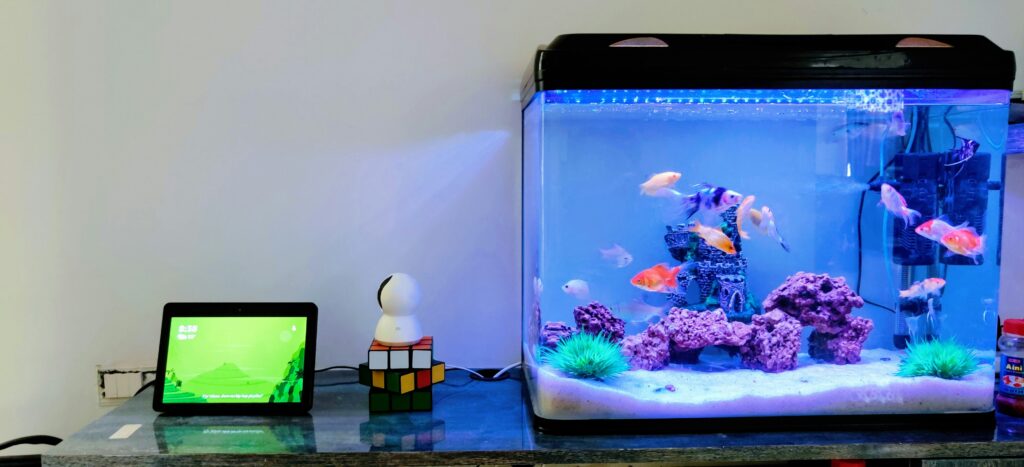
Cold-water fish like goldfish are the main exception. If you’re keeping those, you can skip the heater. But if you’re keeping anything commonly called “tropical,” get a submersible heater and a separate thermometer to verify it’s holding the right temp.
Gravel, plants, and décor are doing more than you think
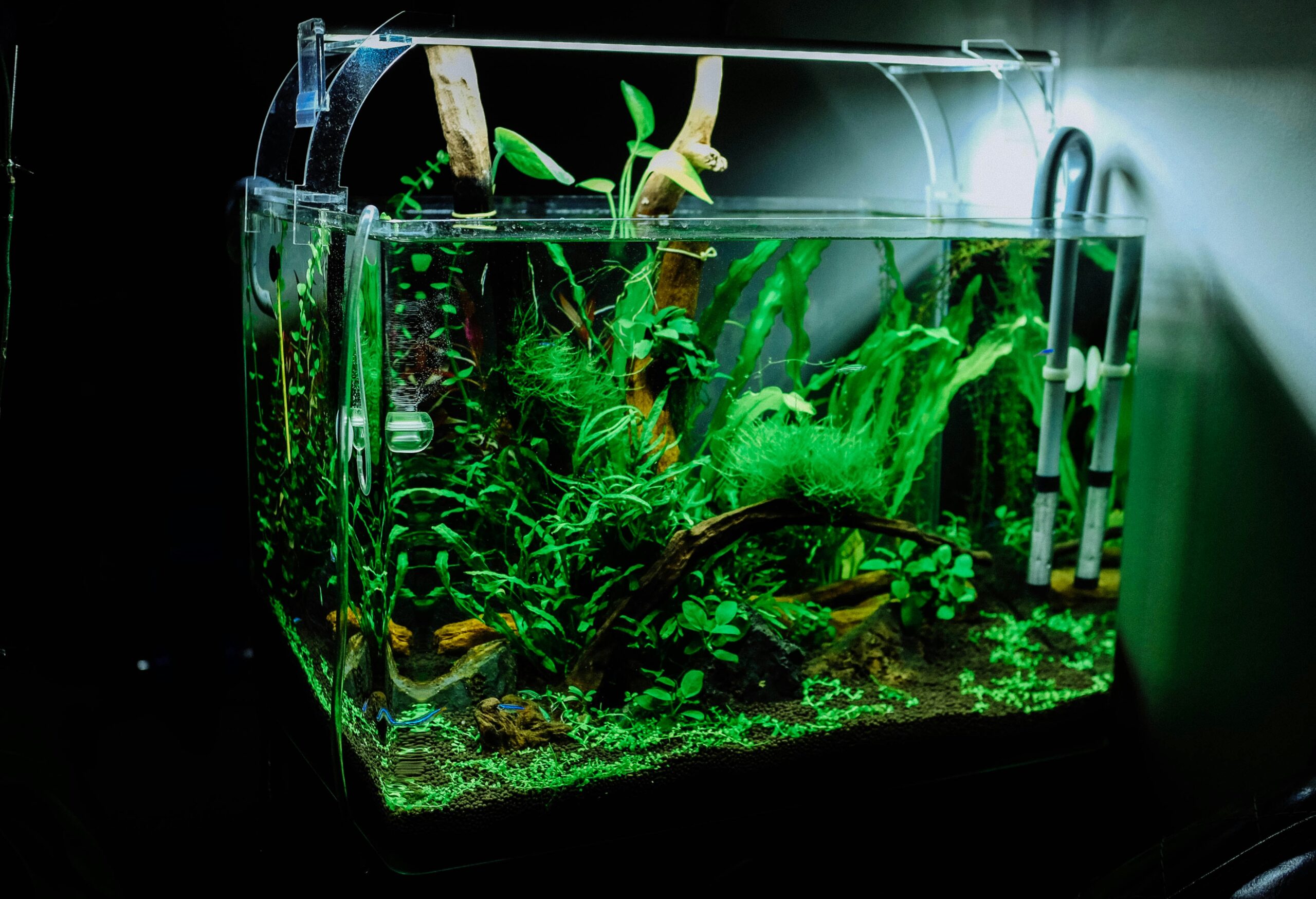
Fish need places to hide. This isn’t aesthetic, it’s behavioral. A fish with nowhere to retreat to is a stressed fish, and chronic stress kills. Plants (live or artificial), caves, driftwood. These give fish territories to establish and break line of sight between aggressive tankmates.
Live plants do extra work: they absorb nitrates, produce oxygen, and make the whole system more stable. They take a bit more effort than plastic plants, but if you’re up for it, they’re worth it.
The substrate (gravel or sand on the bottom) also houses a significant portion of the beneficial bacteria that keep your nitrogen cycle running. Don’t vacuum it too aggressively or you’ll disrupt that colony.
The nitrogen cycle. Do this before adding fish
This is the part most beginners skip, and it’s why most beginners lose fish.
Before any fish go in the tank, the aquarium needs to go through a process called cycling. Beneficial bacteria need to colonize your filter and substrate. Those bacteria convert ammonia (fish waste) into nitrites, and then into nitrates. Without them, ammonia builds up to toxic levels within days.
Cycling takes 4-6 weeks on average. You can speed it up with bottled bacteria, a seeded filter from an established tank, or a small amount of fish food to create ammonia. Fish Tank World’s guide to the nitrogen cycle walks through the process step by step if you want a deeper breakdown.
Test your water throughout. When ammonia and nitrite both read zero and nitrates are present, your tank is cycled and ready for fish.
Feed the right food
Different fish eat at different levels of the water column. Surface feeders do well with flakes. Bottom feeders need sinking pellets or wafers. Most community fish are somewhere in between and accept a pellet or flake diet fine.
The bigger risk with feeding isn’t the wrong food type — it’s overfeeding. Uneaten food rots and spikes ammonia fast. A small pinch once or twice a day is usually enough. If food hits the bottom uneaten after a few minutes, you’re feeding too much.
Basic maintenance gear
You’ll need a gravel vacuum for weekly water changes (aim for 20-30% of tank volume). An algae scraper for the glass. A dedicated bucket that never touches cleaning products. A fish net for moving fish when needed.
Water changes are your most powerful maintenance tool. They dilute nitrates, refresh minerals, and reset the tank before small problems become big ones. Do them on a schedule, not just when the water looks bad.
Setting up an aquarium the right way takes a few extra weeks upfront. But those weeks pay off in fish that actually live, a tank that stays balanced, and a hobby you actually enjoy instead of constantly troubleshoot. The fish tank essentials aren’t a long list — they’re just specific. Get these pieces right and the rest is mostly patience.
Fish tank essentials – FAQ
The most important fish tank essentials include an appropriately sized aquarium, a reliable filtration system, a water conditioner, test kits, an aquarium heater (for tropical fish), gravel or substrate, décor or plants, fish food, and basic cleaning tools like a net and gravel vacuum.
A filtration system is one of the most critical fish tank essentials because it removes waste, improves oxygen levels, and helps maintain a healthy biological balance by breaking down harmful toxins like ammonia and nitrites.
Yes, if you keep tropical fish, a heater is essential. It maintains a stable water temperature, which helps reduce stress and supports the long-term health of your fish.
They are both decorative and functional fish tank essentials. Plants and décor provide hiding spots, reduce stress, and help create a more natural and stable environment for fish.