

There’s a specific kind of annoyance that only happens at the worst possible moment. You start a load of laundry and the detergent bottle burps out its last empty gulp. You open the dishwasher to load it and realize you ran out of pods three loads ago and just never replaced them. You reach for the toilet paper and, well, you know how that one goes.
None of this is really about forgetting to shop. It’s about not having a system for the stuff that runs out quietly, in the background, until it doesn’t. This is the full list of what a household actually burns through, how fast, and, more usefully, how to buy it so you stop finding out you’re out at the exact wrong time.
Laundry: the one you’ll run out of first
A typical household runs through about 300 loads of laundry a year, using roughly 2.1 ounces of detergent per load, according to data from the American Cleaning Institute and ENERGY STAR, but that figure covers households of all sizes. In a two-person household like mine, it’s closer to half that, maybe 150 to 180 loads a year. Detergent still disappears faster than you’d expect though, since each load takes roughly the same scoop whether it’s for two people or five. At that pace, it’s the single easiest thing to run out of mid-week, especially if you only buy it when the bottle’s already running low instead of when you see a deal.
Here’s the thing I stopped overthinking a while ago: I don’t chase one specific detergent brand. I buy whichever store or house brand my supermarket has that week, and I genuinely can’t tell the difference in how my laundry turns out. That’s not just a hunch. Consumer Reports’ own testing backs it up. In their most recent laundry detergent rankings, Kirkland Signature Ultra Clean (Costco’s store brand) placed in the top five overall, beating out several name brands on stain removal, at a fraction of the per-load cost. The real variation is between individual formulas, not between “store brand” and “name brand” as categories.
What to keep on hand:
- Laundry detergent (pods, liquid, or powder, whichever your machine prefers)
- Stain pre-treater, if you deal with stains often
- Fabric softener or wool dryer balls, if you use one
- Bleach, only if you actually wash whites regularly (more on why that matters below)
One caveat on buying this in bulk: bleach loses potency fast. It’s typically down to reduced effectiveness within about six months of manufacture, per cleaning-product shelf-life research compiled by The Kitchn. A giant jug bought on sale sounds efficient, but if you’re not burning through it in a few months, you’re mostly storing water.
Dishwashing: the one worth actually stockpiling
This is where buying in bulk pays off the most, and it’s backed by more than just convenience. Dishwasher pods and tablets hold their full cleaning strength for roughly 12 to 15 months after they’re made, as long as they’re kept dry and sealed. I’ll buy a full year’s worth of dishwasher tablets when a bulk deal is good enough, whether that’s a supermarket promotion or an Amazon multipack, and I’ve never noticed a drop-off in how clean the dishes come out by month ten or eleven. That math works out particularly well for a two-person household: fewer loads a week means a year’s supply actually takes close to a year to use, instead of running through it in eight months and buying more anyway.
Dish soap for handwashing is the opposite story: it has a short shelf life, generally only about three months once you factor in how a bottle actually gets used and opened. That’s not a great bulk-buy candidate the way dishwasher tablets are.
What to keep on hand:
- Dishwasher detergent (pods or tablets, buy in bulk when the deal is right)
- Dish soap for handwashing (buy smaller quantities more often)
- Rinse aid, if your dishwasher takes one
- Sponges or dish brushes (these wear out faster than people replace them; swap every 2 weeks or so if you’re using them daily)
Toilet paper and trash bags: buy these like you mean it
These two genuinely are “buy as much as storage allows” items. They don’t expire, they don’t lose effectiveness, and running out is maximally inconvenient. Estimates on toilet paper usage vary by roll size and household, landing anywhere from about 85 to 141 rolls per person per year across different industry surveys. For two adults, that’s roughly 170 to 280 rolls a year combined. Scale the per-person number to your own household rather than assuming the often-cited “household of four” figures apply. Trash bag usage is more consistent across sources, at roughly 100 bags per household per year, or a little under two a week, though a two-person household typically fills a kitchen bag more slowly than that average assumes.
If there’s one category to buy in genuine bulk without a second thought, it’s this one.
Cleaning supplies: check the label before you stock up
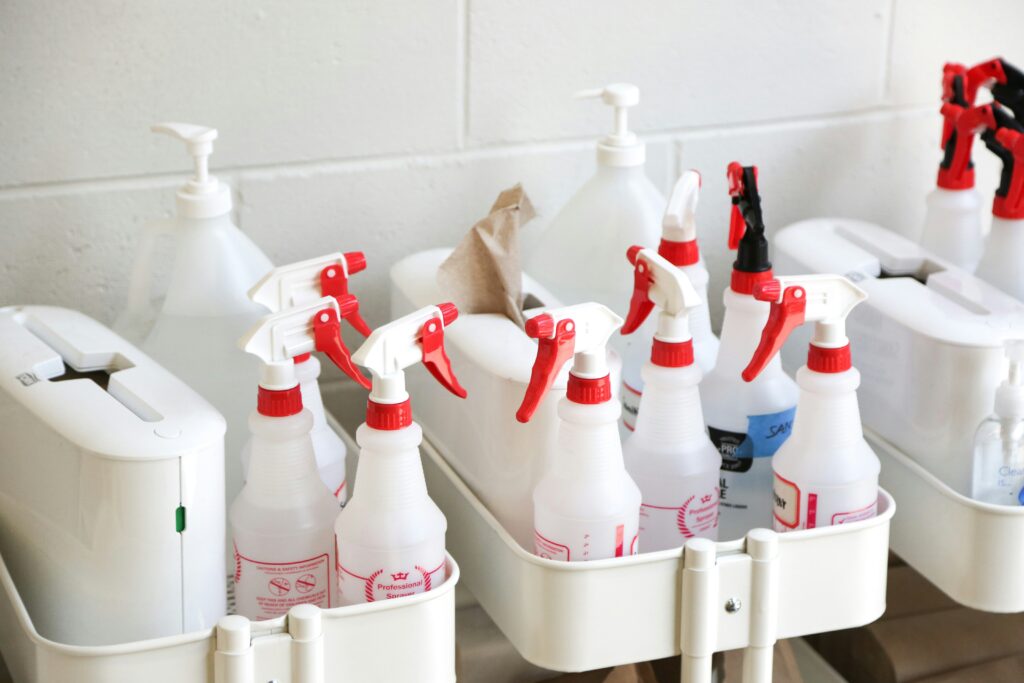
All-purpose cleaner, glass cleaner, floor cleaner, disinfecting spray, paper towels: these are the categories people instinctively buy in bulk, but shelf life varies a lot more than you’d expect. Multi-surface cleaners generally hold up for about two years unopened, but disinfectant and antibacterial varieties are closer to one year, per the same shelf-life research from The Kitchn. Once a bottle’s opened, cut that estimate down further, since exposure to air is what actually degrades the active ingredients.
What to keep on hand:
- All-purpose cleaner
- Disinfectant spray or wipes
- Glass cleaner
- Floor cleaner
- Paper towels
- Sponges, scrub brushes, microfiber cloths
- Vacuum cleaner bags or filters, if your model uses them
That last one is the easiest to forget entirely, since it’s not something you look at until the vacuum stops picking anything up. Unlike liquid cleaners, bags and filters don’t really degrade on the shelf, so this is one you can buy a few years’ worth of in one go and just stash the spares next to the vacuum itself, so you’re not hunting through a cabinet when the current one’s full.
If you’ve got a full shelf of half-used bottles from three years ago, that’s worth a clear-out before you buy more. A bottle that’s separated, changed color, or lost its smell has likely lost a good chunk of its cleaning power too.
Personal care: the forgiving category
Toothpaste, soap, shampoo, deodorant: these are fairly shelf-stable and don’t punish you much for buying ahead. Running out mid-use is annoying but rarely disastrous, so this is a reasonable place to stock up when you see a deal, without needing to think much about timing.
Kitchen staples: the overlap category
Milk, eggs, bread, pantry basics: these run on a weekly rhythm rather than a stockpile one, since most of it is perishable. We go deeper into food-specific shopping separately; this list sticks to the non-food side of household essentials.
Linens and towels: slower-moving, still worth tracking
Towels and bed linens don’t run out the way consumables do, but they do wear thin and need replacing on a longer cycle, often without anyone noticing until a towel’s more hole than fabric. Keeping a rough sense of how old your current set is (a year or two of regular use is typical before thinning starts) saves you from a surprise replacement all at once.
How I actually decide what to buy in bulk
The shelf-life numbers above aren’t just trivia; they’re the actual rule I use. If something holds its effectiveness for a year or more when stored properly (dishwasher tablets, toilet paper, trash bags), I’ll buy as much as a good deal offers. If it degrades in a few months (bleach, dish soap, disinfectant), I buy smaller amounts more often, even if the per-unit price is worse. Saving 20% on a jug of bleach you’ll only half-use before it weakens isn’t actually a saving.
The other half of this is knowing what you already have before you buy more. I keep my pantry and cleaning cabinet organized enough that I can see what’s already stocked at a glance. There’s nothing more annoying than coming home with a new bag of coffee beans only to find three unopened ones already behind it. I’m working on a full guide to building that kind of household storage and inventory system, since it matters just as much as the shopping list itself. Until that’s up, the short version: group items by category rather than by whatever fit on the shelf, keep backup stock visible instead of buried behind daily-use items, and do a 30-second visual check of what’s low before every grocery run rather than relying on memory.
Frequently asked questions
Is store-brand detergent actually as good as name-brand? For most formulas, yes. Consumer Reports’ testing has repeatedly found store brands performing on par with, or better than, well-known name brands on stain removal and cleaning power. The real differences are between specific product formulas, not between store brands and name brands as a category. It’s worth checking current test results occasionally, since rankings do shift as formulas change.
How much should I actually buy in bulk without wasting money? Match the bulk purchase to the product’s real shelf life. Items that hold up for a year or more unopened (dishwasher tablets, toilet paper, trash bags) are safe bulk buys. Items that degrade within a few months (bleach, dish soap, some disinfectants) are better bought in smaller amounts more often, even at a slightly worse per-unit price.
Do cleaning products actually expire? Yes, though “expire” is a bit strong: they lose effectiveness rather than becoming unsafe. Signs include separation that won’t remix when shaken, a changed color, a different smell, or visibly reduced cleaning performance. Bleach is the fastest to fade, typically within about six months.
What’s the easiest way to stop double-buying things you already have? Keep similar items grouped together and visible rather than scattered across different cabinets, and get in the habit of a quick look before you shop rather than buying from memory. It sounds basic, but it’s the single biggest fix for the “I already have three of these” problem.
Bottom line
Most of what a household runs out of falls into two buckets: things that barely degrade and are safe to buy in real bulk (toilet paper, trash bags, dishwasher tablets), and things that fade fast and are better bought little and often (bleach, dish soap, disinfectant). Match your buying habits to which bucket something’s in, keep track of what’s already on the shelf, and you stop finding out you’re out of something at the worst possible moment.
Products that make this easier
| Category | Volume (per year) | Frequency | Essential items | Deal |
|---|---|---|---|---|
| Laundry | ~300 loads | ~0.8 loads/day | Detergent (store or name brand), bleach, fabric softener | 🛒 Check on Amazon |
| Dishwashing | ~95 loads + daily handwashing | ~2 loads/week | Dishwasher pods/tablets (buy in bulk), dish soap (buy small) | 🛒 Check on Amazon |
| Toilet Paper | ~85-141 rolls/person | Daily | Toilet paper (bulk-friendly) | 🛒 Check on Amazon |
| Trash Bags | ~100 bags/household | ~2/week | Trash bags (bulk-friendly) | 🛒 Check on Amazon |
| Cleaning Supplies | Varies by shelf life | Daily/weekly | All-purpose cleaner, disinfectant, glass cleaner, floor cleaner, paper towels, vacuum bags/filters | 🛒 Check on Amazon |
| Personal Care | 2-3 tubes/bottles per item | Daily | Toothpaste, soap, shampoo, deodorant | 🛒 Check on Amazon |
| Linens & Towels | 5-10 towels/person | Weekly wash, yearly replace | Towels, bed linens, pillowcases | 🛒 Check on Amazon |
Some links on this page may be affiliate links. If you purchase through one of these links, we may earn a small commission at no additional cost to you.